When doctors use tools like syringes or breathing masks, those items must be completely free from harmful germs. What if, instead of helping patients, these tools made them sick?
On this page
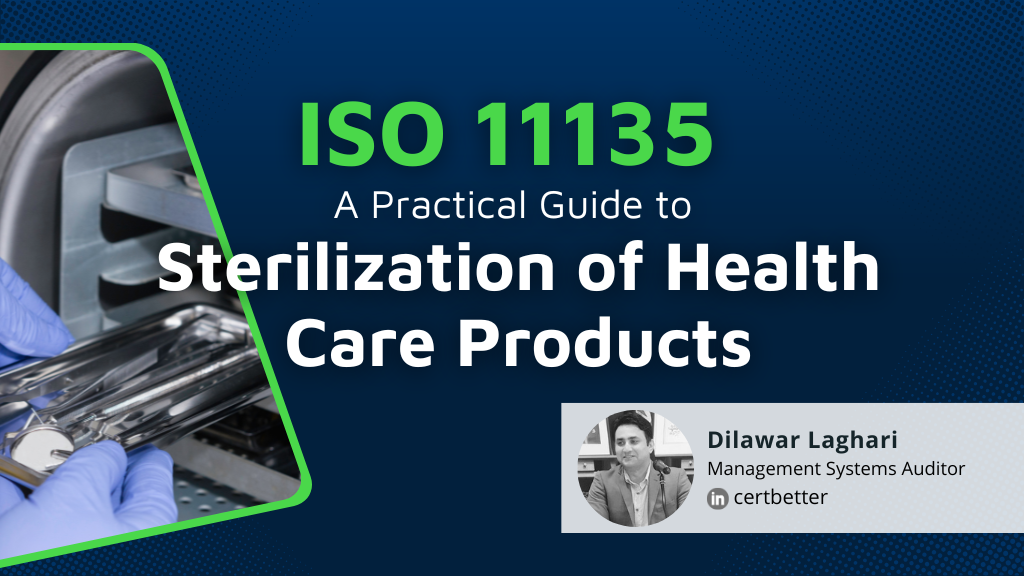
That’s where sterilization plays a vital role. It's a precise process designed to kill all bacteria and microorganisms to make the product safe for use. One of the most effective methods is ethylene oxide (EO) gas sterilization. EO is especially useful for delicate medical devices or products that are already sealed in their packaging.
"Sterilization saves lives, and ISO 11135 ensures we do it the right way, every time."
To ensure EO sterilization is done correctly and consistently, we use ISO 11135. This internationally recognized standard provides a detailed framework to carry out sterilization safely. Let’s break it down.
Recommended Read: ISO 15378 The Essential Guide to Ensuring Quality in Primary Packaging for Medicinal Products
Why ISO 11135 Is Crucial for Your Business
If you're involved in manufacturing or distributing medical devices, you already understand the importance of safety, quality, and compliance. But achieving all three consistently, especially across global markets, is no small feat. That’s where ISO 11135 comes in.
Here’s how this standard supports your business objectives, from protecting patients to satisfying regulators and boosting your reputation.
Ensuring Patient Safety
When manufacturing medical tools, patient safety is paramount. ISO 11135 ensures that your products are sterile and safe for use, particularly when they are used in or on the human body.
For example, a surgical instrument manufacturer follows ISO 11135 to verify each sterilization cycle. This guarantees that the instruments are free from infection-causing microbes, providing peace of mind to healthcare professionals.
Meeting Global Regulatory Requirements
Different countries have different compliance rules. ISO 11135 provides a harmonized approach to help you meet international regulatory requirements.
If you manufacture in the United States and want to distribute in Europe, ISO 11135 helps demonstrate compliance with both FDA and EU MDR standards. This simplifies global market entry and streamlines regulatory approvals.
Improving Operational Efficiency and Repeatability
Following ISO 11135 helps standardize sterilization processes, improving efficiency and reducing the risk of errors.
For instance, a company that sterilizes plastic medical components might use standardized load configurations. This ensures uniform gas exposure and reduces sterilization failures, saving time and increasing reliability.
Building Trust and Market Reputation
Compliance with ISO 11135 signals to hospitals and healthcare buyers that your products are manufactured with the highest safety standards.
Hospitals often prefer suppliers who follow ISO 11135. It assures them that the tools they use on patients are sterile and dependable, thereby enhancing your reputation and competitive edge.





Do You Need ISO 11135? A Practical Checklist
Not every business working with medical devices needs ISO 11135, but many do without even realizing it. If you're unsure whether the standard applies to your operations, this checklist will help clarify the fit.
Let’s walk through a few key questions to determine whether ISO 11135 is essential for your product, process, or growth plans.
1. Do you sterilize single-use medical devices?
Products like catheters, syringes, and surgical kits often require EO sterilization. ISO 11135 is the benchmark for doing this effectively.
2. Are you required to meet international regulatory standards?
If you're targeting markets in the U.S., Europe, or other regulated regions, ISO 11135 supports compliance with FDA, EU MDR, and similar frameworks.
3. Do you face challenges in validating EO sterilization cycles?
Controlling EO sterilization involves managing variables like temperature, pressure, humidity, and exposure time. ISO 11135 helps you validate and control these elements for reliable outcomes.
4. Are you seeking consistency and repeatability in sterilization?
ISO 11135 helps establish a repeatable process that ensures every batch is sterilized to the same standard.
5. Do you want to minimize patient risk and improve regulatory confidence?
By following ISO 11135, you demonstrate a commitment to safety and compliance, which builds trust with both customers and regulators.
Key Components of ISO 11135: Building a Reliable EO Sterilization System
Understanding what’s inside ISO 11135 helps you implement it confidently. This section highlights the technical building blocks of a safe and effective EO sterilization system, without overwhelming you with jargon.
From preparing your load to validating your cycle, these components are the foundation of a compliant and repeatable sterilization process.
1. Preconditioning and Preparation
Before the sterilization cycle begins, temperature and humidity must be optimized. EO gas performs best under controlled conditions. A simple adjustment like room temperature can significantly improve effectiveness.
2. Sterilization Process Design and Validation
Designing the sterilization process involves determining gas concentration, exposure time, temperature, and humidity. Validation ensures this "recipe" works reliably before it is used regularly.
3. Load Configuration and Product Packaging
Proper loading ensures EO gas reaches all surfaces. Standardized load configurations and breathable packaging are essential for uniform sterilization.
4. Biological and Chemical Indicators
Use biological indicators (BIs) and chemical indicators (CIs) to verify the effectiveness of the sterilization process. BIs use harmless spores to test sterilization success, while CIs change color to confirm EO exposure.
5. Post-Sterilization Aeration
Products must be aerated after sterilization to remove any residual EO. Depending on the material, this can take hours or days. Aeration ensures safety for end-users.
Steps to Align with ISO 11135: A Clear Roadmap
Knowing the components of ISO 11135 is one thing; putting them into practice is another. If you're ready to align your operations with this standard, here’s a step-by-step roadmap to guide your journey.
Think of this as your implementation blueprint, whether you’re starting from scratch or updating an existing process.
Step 1: Understand the Standard and Its Scope
Familiarize yourself with ISO 11135 and what it requires in terms of process control, validation, and documentation. Know how the standard applies to your product types, manufacturing processes, and market requirements.
Step 2: Conduct a Gap Analysis
Compare your current sterilization practices with ISO 11135 requirements. Look at documentation, equipment, staff training, and testing methods. Identify what’s already in place and where the gaps are. Use this as a starting point for improvement.
Step 3: Develop or Update EO Sterilization Protocols
Create or revise your EO sterilization procedures. Document everything clearly, from EO concentration and exposure time to temperature and load patterns. Include SOPs, safety precautions, and staff responsibilities to ensure consistency.
Step 4: Run Validation Studies
Conduct Installation Qualification (IQ) to verify correct setup, Operational Qualification (OQ) to ensure the system functions properly, and Performance Qualification (PQ) to confirm that your sterilization process achieves its intended result with actual products.
Step 5: Monitor and Control Routine Operations
Implement monitoring systems to track key sterilization parameters such as temperature, pressure, EO levels, and cycle duration. Keep detailed records and review them regularly to confirm process integrity and readiness for audits.
Step 6: Review, Audit, and Keep Improving
Establish a schedule for internal audits and process reviews. Use performance metrics, incident reports, and customer feedback to identify opportunities for improvement. Continuously train staff and upgrade equipment when necessary to stay ahead of compliance expectations.
Must Read: ISO 22000: The Essential Guide to Safe & Reliable Food Production
Challenges in Implementing ISO 11135
Even with a strong plan and good intentions, EO sterilization isn’t always smooth sailing. Many organizations run into similar barriers when trying to meet ISO 11135 requirements.
In this section, we’ll highlight the common obstacles you might face and offer practical strategies to help you overcome them efficiently.
Validation and Process Control Can Be Complex
Implementing ISO 11135 requires detailed validation of equipment and procedures. The process includes multiple qualifications (IQ, OQ, PQ), and each phase must be documented precisely. Many teams initially feel overwhelmed by the number of variables involved, such as EO concentration, humidity, temperature, and exposure time.
Ethylene Oxide Is Powerful but Toxic
EO is highly effective but also hazardous. Exposure to EO can pose health risks to workers and leave behind toxic residues on products if not managed properly. Proper aeration protocols must be followed to ensure all residual EO is removed before the product is released.
Regulatory Requirements and Paperwork
ISO 11135 is often used alongside other regulations, such as FDA guidelines or the EU MDR. Each of these may have unique documentation requirements. To manage this, create integrated quality documents that align with multiple regulatory frameworks.
High Cost of EO Sterilization Equipment
EO sterilization systems involve a significant investment. For smaller businesses, the cost can be prohibitive. In such cases, outsourcing sterilization to ISO 11135-certified providers is a practical and cost-effective solution.
Additional Considerations
Technical readiness is essential, but success with ISO 11135 also depends on leadership, culture, and long-term planning. These supporting elements often separate the companies that thrive from those that stall.
Here are the critical, often-overlooked factors that strengthen your EO sterilization system and keep it resilient over time.
Leadership Commitment
Successful implementation starts with leadership. When executives make sterilization a company priority, through budget, training, and attention, teams have the support they need to succeed.
Training and Staff Competency
Well-trained staff are the backbone of a safe EO process. Everyone involved should understand how the equipment works, what parameters to monitor, and how to respond to errors or emergencies.
Environmental and Safety Compliance
EO gas is hazardous. Facilities must maintain strong safety systems, including ventilation, leak detection, and emission controls. Compliance protects your workers, your community, and your reputation.
Use of Technology
Smart EO systems now feature automated controls, alerts, and data logging. These tools reduce human error, improve traceability, and help teams stay audit-ready with less effort.
Integration with ISO 13485 and ISO 14971
ISO 11135 fits best when it’s part of your bigger quality and risk strategy. Aligning it with ISO 13485 and ISO 14971 creates a unified system that supports safe design, production, and sterilization.
FAQs: Common Questions About ISO 11135
What is ISO 11135, and what does it cover?It outlines how to safely use EO gas to sterilize medical devices, including process design, validation, and control.
How does ISO 11135 relate to ISO 13485?It supports ISO 13485 by addressing sterilization requirements within a medical device quality management system.
How long does EO validation typically take?Validation may take several weeks to months, depending on product complexity and readiness.
What are the alternatives if EO isn’t viable?Steam, gamma radiation, and electron beam (e-beam) are common alternatives
Do I need special training to follow ISO 11135?Yes, team training is essential to ensure process understanding and safe operations.
Where to Download ISO 11135 PDF
To download the ISO 11135 PDF, visit the official ISO website or trusted distributors such as ANSI, BSI, or your national standards body. ISO 11135 outlines requirements for ethylene oxide sterilization of health care products and is essential for regulatory compliance and system validation.
Here's the link: ISO 11135 download PDF
Always make sure to download the standard from an official source to ensure you're working with the most current and accurate version of the document.
Conclusion: Why ISO 11135 Is Essential for Safe and Compliant Sterilization
Sterilization is more than a technical requirement; it’s a public health obligation. And when ethylene oxide is your method of choice, ISO 11135 gives you the structure to do it right.
Whether you're a startup aiming for market approval or a large manufacturer refining your process, ISO 11135 helps you stay compliant, efficient, and trusted. It protects patients, satisfies regulators, and strengthens your market position.
From catheters to complex devices, ISO 11135 ensures they are clean, safe, and ready for use. It's not just a standard, it's a smart, reliable way to keep people safe, one sterilized product at a time.