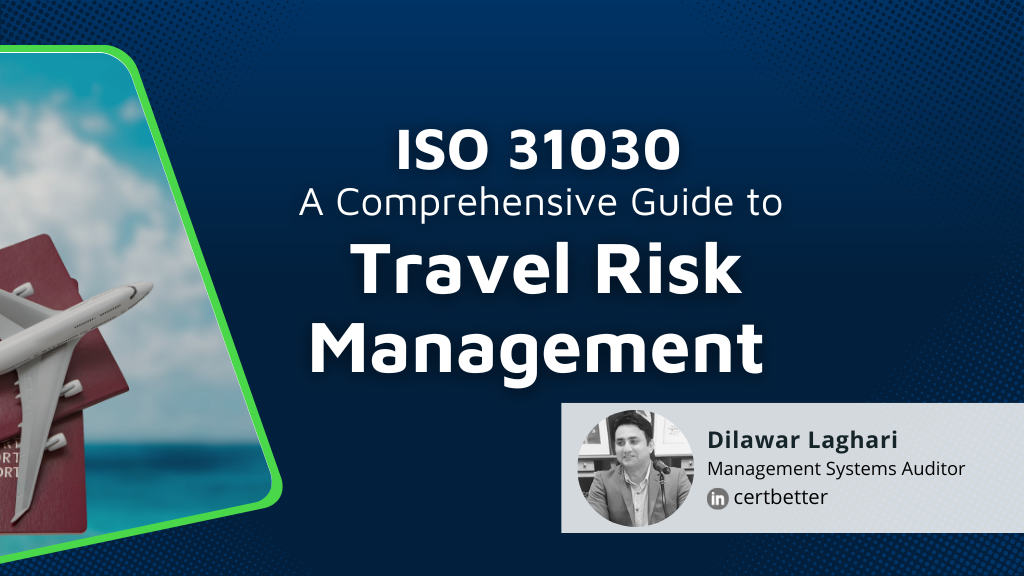
Travel is exciting, but it can also be unpredictable. Flights get delayed, luggage goes missing and sometimes, travelers find themselves in unsafe situations.
On this page
Imagine you own a company, and your employees travel for work. What happens if their flight gets canceled? What if they lose their passport or get sick in another country? What if they unknowingly enter a dangerous area? Without a plan, these issues can turn into serious problems or even dangerous situations. ISO 31030 helps businesses create a plan to handle travel risks before they become emergencies.
That’s where ISO 31030 comes in. Think of it as a travel safety rulebook for businesses. It helps companies reduce risks, protect their employees and handle problems before they happen.
"No matter the industry, ISO 31030 helps businesses plan ahead, avoid costly mistakes, and most importantly, keep their employees safe."
This travel safety standard works in many industries. Healthcare companies use it to protect doctors and medical staff traveling for conferences, ensuring they have medical insurance, emergency contacts, and local health information. Construction companies train engineers visiting job sites, teaching them about local weather, work conditions and transportation risks. Tech companies send employees overseas for meetings and provide real-time alerts about protests, extreme weather, or health concerns.
Must Read: ISO 45001 For Beginners: Easy Guide to Implementing Health and Safety Standard
Want to know how it works? Let’s dive in!
Why Is ISO 31030 Important for Your Business?
ISO 31030 is not just a set of rules. It’s a smart way to keep travelers safe and help businesses handle travel risks. It makes sure employees are protected and companies are prepared for any problems that might come up.
1. Keeping Travelers Safe
Travel comes with risks. Flights get delayed. People get sick. Accidents happen. ISO 31030 helps businesses plan ahead so employees know what to do in these situations.
Imagine you run a big company. Your employees travel to different countries for work. Before they go, they get safety tips, emergency contacts, and local travel advice. If something goes wrong, they know exactly what to do.
2. Avoiding Business Disruptions
If a company isn’t prepared, travel problems can cause big delays. Employees might miss meetings, shipments could be late, or work could stop. With ISO 31030, businesses can handle these issues quickly.
For example, a company sends a team abroad for a project. Suddenly, there’s a security threat. Because they followed ISO 31030, they already have a plan. The employees stay safe, and the business keeps running smoothly.
3. Following the Law
Many countries have laws about employee safety. If a company ignores these rules, they could face fines or legal trouble. ISO 31030 helps businesses follow these laws and avoid big problems.
Think about a company that sends employees to another country. They don’t check local travel laws, and their employees run into trouble. This could lead to fines or lawsuits. But if they follow ISO 31030, they know the rules and stay compliant.
4. Making Smart Travel Decisions
Before sending employees on a trip, businesses need to make informed decisions. Where are they going? Is it safe? What’s the best way to get there? ISO 31030 helps companies answer these questions.
For example, a business plans to send a team to a country with health concerns. Instead of taking risks, they use ISO 31030 to assess the situation. They decide to delay the trip or take extra safety measures.
5. Gaining Trust from Investors and Employees
When a company takes travel safety seriously, it earns trust from employees, clients, and investors. People see that the company cares and acts responsibly.
Imagine a financial company with employees who travel often. They follow ISO 31030, ensuring every trip is well-planned and safe. Investors see this and feel confident in the company’s management. Employees feel valued and protected.





Does Your Business Need ISO 31030? A Simple Checklist
Travel can be unpredictable. Whether it’s a flight delay, a health emergency, or a security threat, unexpected issues can disrupt business trips and put employees at risk.
ISO 31030 provides a structured approach to managing these risks, ensuring businesses are prepared for any situation.
Here’s how to determine if your organization needs ISO 31030:
1. Do your employees travel often for work?
If business travel is a regular part of your operations, having a travel risk management strategy is essential. Frequent travelers face greater exposure to risks such as transportation delays, lost documents, or sudden health concerns.
Without a structured approach, these issues can lead to lost productivity and increased costs. ISO 31030 ensures that every trip is planned with safety in mind, reducing disruptions and improving efficiency.
2. Do they visit places that might be unsafe or have health risks?
Certain locations pose higher risks due to factors like political instability, crime rates, extreme weather, or public health concerns. Companies that send employees to these regions must have a risk assessment process in place to evaluate the safety of each destination.
ISO 31030 helps businesses develop clear guidelines on when to approve travel, what precautions to take, and how to respond to emergencies.
3. Is your company responsible for keeping travelers safe?
When employees travel for work, the company has a duty of care to ensure their safety. This means providing clear travel policies, emergency contacts, health and security briefings, and access to assistance if needed.
Failure to do so can lead to serious consequences, including reputational damage, legal liability, and financial losses. ISO 31030 helps businesses meet their responsibilities by providing a structured framework for travel safety.
4. Have you had problems during business trips before?
If your company has experienced travel-related incidents in the past—whether it was a safety concern, a medical emergency, or a logistical problem—you know how challenging it can be to manage these situations.
A reactive approach is costly and stressful. ISO 31030 allows businesses to be proactive rather than reactive, helping to prevent issues before they arise and ensuring a faster, more effective response when problems do occur.
5. Do you want a better way to manage travel risks?
Many companies lack a formal travel risk management policy, leaving employees to handle challenges on their own. ISO 31030 provides a clear, standardized process to assess risks, set travel guidelines, and provide employees with the resources they need to travel safely.
By implementing this framework, businesses can increase operational efficiency, reduce costs, and build trust with employees and stakeholders.
Key Components of ISO 31030 Travel Risk Management
ISO 31030 provides a structured approach to ensure businesses have clear policies, strong risk assessments, and effective response plans.
Travel Risk Management Policy
A strong travel risk management policy is the foundation of a safe and organized travel system. It sets the rules for how a company plans, approves, and manages employee travel. Without a clear policy, travel decisions can become inconsistent, putting employees and the business at risk.
A well-developed policy ensures that employees understand their responsibilities, businesses have a standardized process for assessing risks, and safety measures are consistently followed across all departments. When a company establishes a clear, organization-wide policy, it aligns with broader corporate risk management strategies, ensuring a structured approach to travel safety.
Risk Assessment and Planning
Before approving a trip, businesses need to carefully evaluate potential risks at the destination. This includes security threats, health concerns, weather conditions, and political stability. By assessing these factors in advance, companies can make informed decisions about whether additional precautions are needed, such as extra security, travel insurance, or avoiding the destination altogether.
Proper planning minimizes the likelihood of employees facing unexpected dangers, reduces travel disruptions, and helps the company manage costs more effectively. Businesses that follow a structured framework for risk assessment ensure their employees travel with confidence, knowing they are well-prepared for any situation.
Traveler Preparation and Awareness
Even the best travel policies won’t be effective if employees are not properly trained and informed. Every traveler should know what to expect, who to contact, and how to respond in case of emergencies. Travel preparation includes pre-trip briefings, emergency contacts, and awareness training tailored to the destination.
Cultural differences, local laws, and common risks should be addressed to prevent misunderstandings or unsafe situations. Employees who travel frequently should also receive ongoing training to stay updated on new travel risks and best practices. When travelers are well-prepared, they can focus on their work rather than worrying about potential safety issues.
Incident Response and Crisis Management
No matter how much planning is done, emergencies can still happen. Companies must have clear emergency response protocols in place for situations such as medical emergencies, security threats, or natural disasters. A well-structured crisis management plan ensures employees receive immediate assistance and know exactly what steps to take in an emergency.
A company’s response system should include 24/7 support, real-time communication channels, and clear evacuation plans if necessary. Organizations that invest in strong crisis management strategies can respond quickly to unexpected situations, minimizing disruptions and ensuring their employees' safety.
Monitoring and Continuous Improvement
Travel risks change constantly, so businesses must regularly monitor and update their travel policies. Keeping track of global risks, learning from past incidents, and adjusting travel guidelines ensures that companies remain proactive rather than reactive.
Monitoring systems should include real-time tracking of employee locations, ongoing assessment of destination risks, and regular policy reviews. Companies that embrace continuous improvement not only enhance traveler safety but also build long-term resilience in their travel management strategies.
Steps to Implement ISO 31030: A Clear Roadmap to Success
Implementing ISO 31030 ensures that businesses have a structured approach to managing travel risks. A well-executed travel risk management strategy helps organizations protect their employees, reduce disruptions, and comply with global safety standards. Following a clear roadmap makes the process more efficient and effective.
Step 1: Understanding ISO 31030 Requirements
Before implementation, it’s essential to understand what ISO 31030 covers and how it applies to your organization. This standard provides guidelines on assessing travel risks, establishing policies, and creating support systems for business travelers.
Companies should familiarize themselves with the key principles, ensuring they align with their overall risk management strategies. A solid understanding of the standard helps businesses make informed decisions about policy development and implementation.
Step 2: Conducting a Travel Risk Assessment
Every business has different travel risks depending on the destinations, industries, and types of employees traveling. A travel risk assessment identifies potential threats such as security risks, health hazards, and environmental concerns.
Companies should evaluate their current policies, pinpoint gaps, and determine which areas need improvement. A detailed risk assessment allows organizations to create a structured, proactive approach to managing travel-related challenges.
Step 2: Developing a Travel Risk Management Policy
Once risks are identified, businesses need a clear and consistent policy to manage them. A travel risk management policy outlines the company’s approach to approving trips, assessing risks, providing safety measures, and responding to emergencies.
The policy should be accessible to all employees and ensure that risk management procedures are followed at every stage of business travel. A well-defined policy serves as the foundation for effective travel risk management.
Step 3: Implementing Traveler Support Systems
Having a policy in place is not enough—businesses must actively support travelers by providing them with the tools and resources they need to stay safe. Employees should have access to pre-travel briefings, emergency contacts, medical support, and real-time travel alerts.
Implementing technology such as travel tracking systems, can help organizations monitor employees and provide immediate assistance if needed. A well-structured support system ensures that employees feel confident and prepared when traveling for work.
Step 4: Monitoring and Reviewing Travel Risk Management Practices
Travel risks are constantly changing, which means travel risk management policies must be continuously evaluated and updated.
Businesses should regularly review the effectiveness of their travel safety strategies, learn from past incidents, and refine their policies based on new threats. Ongoing monitoring helps organizations stay proactive and improve their risk management framework over time.
Step 5: Certification and Compliance
While ISO 31030 certification is not mandatory, aligning with the standard helps businesses demonstrate their commitment to traveler safety. Certification ensures that a company meets international best practices for travel risk management.
By adopting ISO 31030, organizations build trust with employees, clients, and stakeholders while enhancing their overall safety and risk management strategies.
Common Challenges in Implementing ISO 31030 & How to Overcome Them
Implementing ISO 31030 can significantly improve travel risk management, but like any new system, it comes with challenges. Businesses must address these obstacles proactively to ensure smooth adoption and long-term success. Here are some common challenges and practical solutions to overcome them.
Resistance to Change
Many employees and stakeholders may be hesitant to adopt new travel risk management policies. People are often comfortable with existing processes and may not see the need for change. This resistance can slow down implementation and reduce compliance.
The best way to overcome this challenge is through education and communication. Businesses should clearly explain why ISO 31030 is beneficial, how it improves traveler safety, and how it reduces risks for both employees and the company.
Providing training sessions, sharing real-life case studies, and involving key stakeholders in decision-making can help create buy-in and ensure a smoother transition.
Resource Allocation Issues
Implementing a structured travel risk management system requires time, money, and personnel. Some businesses may struggle to dedicate enough resources to the process, especially if they operate on tight budgets or have other competing priorities.
A practical solution is to prioritize high-risk travel areas and scale implementation gradually. Instead of rolling out ISO 31030 across the entire organization at once, businesses can start with the most critical regions or departments and expand over time. This phased approach ensures effective resource management while still improving travel safety.
Complexity of Managing Global Travel Risks
Businesses with international operations face the added challenge of dealing with multiple countries, each with its own laws, regulations, cultural norms, and risk factors. Keeping up with evolving threats such as political instability, health crises, or environmental hazards can be overwhelming.
To simplify this process, companies should leverage technology and external risk management providers. Travel risk management software, real-time monitoring systems, and partnerships with security firms or medical assistance providers can help businesses stay informed and respond quickly to potential threats. These tools enable organizations to maintain a strong travel risk management framework without requiring excessive internal resources.
Maintaining Compliance and Consistency
Even after successful implementation, maintaining compliance with ISO 31030 can be challenging. Travel risks change constantly, and without regular updates, policies can quickly become outdated. Additionally, ensuring consistent enforcement of policies across different regions and teams can be difficult.
The best way to address this challenge is through regular audits and policy reviews. Companies should conduct frequent risk assessments, update guidelines based on new threats, and ensure employees are aware of any changes. Assigning dedicated travel risk management personnel or teams can help maintain consistency and ensure compliance over time.
Additional Considerations Before Implementing ISO 31030
Implementing ISO 31030 requires more than just following a set of guidelines. To ensure its success, businesses must integrate it into their overall strategy, provide proper training, and leverage the right tools. Here are some key factors to consider before rolling out an effective travel risk management framework.
1. Senior Leadership Buy-In
For travel risk management to be effective, it must be a strategic priority at the leadership level. If senior executives don’t support the implementation of ISO 31030, it will be difficult to enforce policies and secure necessary resources.
Companies should ensure that decision-makers understand the benefits of structured travel risk management, including improved employee safety, reduced legal risks, and enhanced business continuity. Leadership commitment sets the tone for the entire organization and ensures compliance across all departments.
2. Alignment with Business Goals
Travel risk management should not be an isolated initiative. Instead, it should align with the company’s overall business objectives. If a company prioritizes global expansion, for example, ensuring safe business travel becomes even more critical.
Organizations should integrate travel risk policies into their corporate governance and risk management strategies, making them an essential part of business operations rather than a standalone compliance requirement.
3. Employee Training & Awareness
Even the best travel risk management policies won’t work if employees don’t know about them. Employees need to understand what risks they may face, how to prepare for travel, and what to do in case of an emergency.
Training programs should include pre-travel briefings, security awareness training, and emergency response guidelines. Businesses should also provide ongoing education to keep employees informed about emerging risks and new safety procedures. The more prepared employees are, the more effective the travel risk management strategy will be.
4. Leveraging Technology
Technology plays a crucial role in implementing and maintaining ISO 31030. Companies should invest in tracking systems, risk assessment tools, and real-time travel alerts to enhance travel safety.
By using technology, businesses can:
- Track employee locations in case of an emergency.
- Monitor real-time risks in travel destinations.
- Provide instant communication and assistance to travelers.
Having the right tools in place ensures a proactive approach to travel risk management, rather than a reactive one.
5. Commitment to Continuous Improvement
Travel risks evolve, so policies must be regularly reviewed and updated. Businesses should establish a process for monitoring incidents, collecting feedback from travelers, and refining travel safety measures based on new threats and challenges.
By fostering a culture of continuous improvement, organizations can ensure that their travel risk management framework remains effective, relevant, and aligned with industry best practices. Regular audits and policy reviews help businesses stay ahead of potential risks and maintain compliance with ISO 31030.
FAQs: Common Questions About 31030
Why should my business implement ISO 31030?ISO 31030 helps businesses protect traveling employees, reduce disruptions, and ensure compliance with duty of care obligations. It enhances safety and supports better decision-making.
Is ISO 31030 certification required?No, certification is not mandatory, but aligning with the standard helps organizations adopt best practices and demonstrate a strong commitment to employee safety.
How often should travel risk management policies be updated?Travel risks are constantly changing. Organizations should regularly review, update, and refine policies based on new threats, industry changes, and feedback from travelers.
How can technology support ISO 31030 implementation?Technology like real-time travel tracking, risk assessment tools, and emergency communication systems can enhance travel safety and streamline compliance with ISO 31030.
How does ISO 31030 reduce business costs?By preventing travel disruptions, reducing legal risks, and improving planning, ISO 31030 helps businesses save money on unexpected expenses and optimize travel-related budgets.
Why ISO 31030 Is a Game-Changer for Travel Risk Management
By implementing ISO 31030, businesses can create a safer environment for employees through risk assessments, safety guidelines, and crisis management plans. When employees feel secure during travel, they can focus on their work without unnecessary stress.
For businesses that rely on travel, ISO 31030 is an essential tool for maintaining smooth, safe, and efficient operations. It helps organizations foster a culture of safety, ensures compliance with duty of care obligations, and provides a structured framework for handling unexpected challenges. If travel plays a vital role in your business, now is the time to implement ISO 31030 and take the first step toward a safer, more resilient travel management strategy.