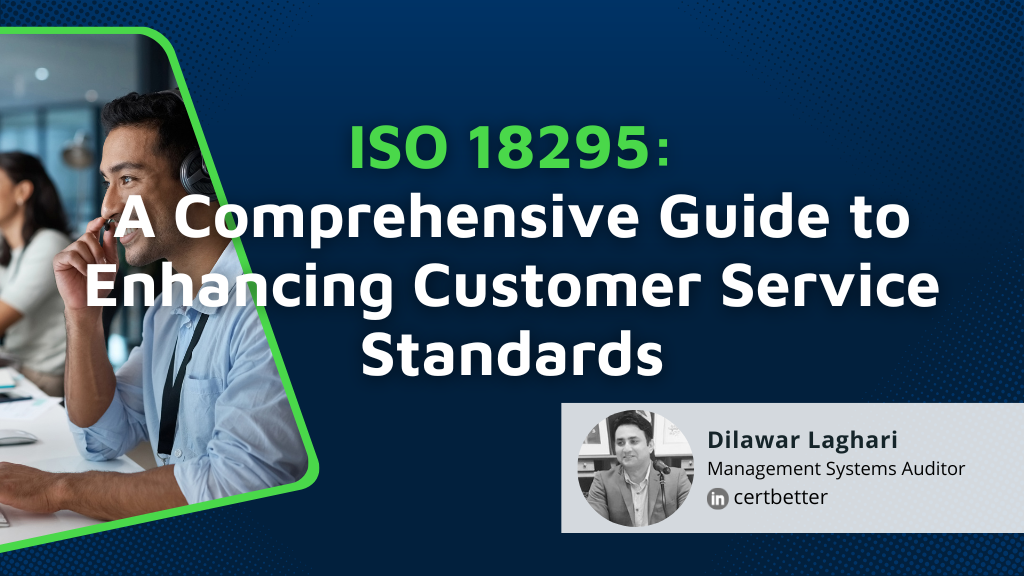
Have you ever called customer service and had a bad experience? Maybe you waited too long, got the wrong information, or felt like no one cared. That’s frustrating, right?
On this page
Good customer service is important for every business. Whether you run a store, a bank, a hotel, or an online shop, your customers expect quick, helpful, and friendly service. If they don’t get it, they might never come back.
This is where ISO 18295 helps! It is an international standard that makes sure customer service centers (also called customer contact centers or CCCs) follow the best practices.
"With ISO 18295, businesses can train their staff better, answer customer questions faster, and make people happier."
If you want to improve customer service, build trust, and keep customers coming back, this guide will show you how ISO 18295 can help!
Recommended Read: ISO 10002 Simplified – A Practical Guide to Effective Customer Satisfaction & Complaints Handling
I. Why ISO 18295 Is Essential: Key Benefits of Standardized Customer Service
Great customer service keeps people happy. Happy customers come back, leave good reviews, and tell others about your business. But bad service? It drives people away. That’s why ISO 18295 is so important. It helps businesses serve customers better, faster, and more consistently. Let’s see how.
1. Improving Customer Experience & Satisfaction
Nobody likes waiting on hold for too long. Nobody likes repeating the same issue to five different agents. Customers want quick, clear, and helpful answers every time they reach out.
ISO 18295 sets rules to make customer service smoother. It helps businesses train staff to respond faster, give accurate and consistent information, and solve problems quickly without making customers repeat themselves.
A bank, for example, gets thousands of calls daily. Some people need help with online banking, while others want to report a lost card. With ISO 18295, the bank’s team follows a clear process. This means faster responses, fewer mistakes, and happier customers.
2. Enhancing Operational Efficiency & Service Consistency
A great customer service team is like a well-oiled machine. Every agent knows what to do, how to do it, and when to do it. This means fewer delays, fewer errors, and better service.
ISO 18295 helps businesses handle more customer requests without long wait times, reduce mistakes by giving agents clear instructions, and improve first-contact resolution so customers don’t have to call multiple times.
A telecom company, for example, receives calls about internet issues. Before ISO 18295, some agents give different answers, confusing customers. With ISO 18295, every agent follows the same process. This means faster troubleshooting and happier customers.
3. Building Trust & Strengthening Brand Reputation
Would you keep buying from a company that ignores your complaints? Probably not. Customers trust businesses that listen, respond, and solve problems quickly.
ISO 18295 builds customer trust by ensuring that every customer gets professional and helpful service, complaints are handled fairly and quickly, and businesses maintain a strong reputation that leads to more loyal customers.
An online store, for example, sells gadgets. A customer receives a broken item and contacts support. Before ISO 18295, responses were slow and unhelpful. After ISO 18295, agents follow a clear return and refund process. The customer is happy, leaves a great review, and shops there again.
4. Ensuring Compliance with Industry Regulations
Some industries must follow strict rules. Banks, hospitals, and government offices have laws about handling customer data. Making a mistake can lead to fines, legal trouble, or lost trust.
ISO 18295 helps businesses stay compliant by ensuring secure handling of personal and financial information, fair and ethical customer treatment, and clear records of customer interactions for legal protection.
A hospital, for example, has a contact center for patient inquiries. Before ISO 18295, some staff shared medical details without proper checks. Now, with ISO 18295, staff follow privacy guidelines, keeping patient information safe and secure.
5. Supporting Omnichannel Customer Engagement
Today, customers don’t just call a business. They send emails, chat online, and even message on social media. Businesses need a system that keeps all communication connected.
ISO 18295 helps businesses connect phone, email, live chat, and social media into one seamless system. It ensures that customers get the same answers, no matter where they reach out. It also helps agents track customer history, so customers don’t have to repeat their issues.
A clothing store, for example, sells online and in malls. Customers contact support on Facebook, email, and phone. Before ISO 18295, some messages got lost, and customers had to explain their issue multiple times. With ISO 18295, all messages go into one system, so every agent knows what’s happening.





II. Does Your Organization Need ISO 18295? A Practical Checklist
Not every business needs ISO 18295, but if your company handles a lot of customer interactions, this standard can be a game-changer. It helps businesses improve service quality, reduce complaints, and create a smoother customer experience.
Ask yourself these questions to see if ISO 18295 is right for you.
1. Do you have a high volume of customer interactions across multiple channels?
If your customers reach out through phone, email, chat, and social media, managing all these interactions can be overwhelming. Without a clear system, messages might get lost, customers could receive inconsistent answers, and response times may suffer.
A travel agency, for example, gets customer requests through calls, WhatsApp, and online chat. Before ISO 18295, their team struggled to track all messages. With ISO 18295, all interactions are handled in one system, making communication faster and more efficient.
2. Are you struggling with inconsistent service quality across different touchpoints?
Customers expect the same level of service no matter how they contact you. If some agents give different answers or response times vary, customers might get frustrated and lose trust in your business.
An insurance company, for example, had different teams handling phone and email requests. Customers calling got quick answers, but email responses took days. After adopting ISO 18295, the company set clear service standards across all platforms, ensuring faster and more consistent replies.
3. Do you want to reduce customer complaints and improve first-contact resolution?
No one likes calling support multiple times for the same issue. If customers have to repeat their problems, wait too long for help, or get bounced between agents, they’ll leave unhappy.
A telecom company, for example, received frequent complaints about unresolved issues. Some customers had to call three or four times to get help. After implementing ISO 18295, the company trained staff to solve most issues on the first call, reducing complaints and increasing customer satisfaction.
4. Are you aiming to enhance your CCC’s efficiency and employee performance?
Customer service teams work best when they have clear processes, good training, and the right tools. If your team is overwhelmed, untrained, or lacks proper guidelines, service quality will drop.
An e-commerce business, for example, noticed that some agents handled 30% more calls than others. The problem wasn’t laziness—it was a lack of training. With ISO 18295, the company standardized training programs, making sure every agent had the skills to work efficiently.
5. Do you need to comply with regulatory requirements for customer service in your industry?
Some businesses, like banks and healthcare providers, must follow strict service regulations. Failing to meet these standards can result in fines, legal issues, or even customer data breaches.
A hospital, for example, needed to ensure that patient information remained confidential when handling phone and email inquiries. After implementing ISO 18295, they created strict guidelines for handling sensitive data, ensuring compliance with healthcare regulations.
III. Key Components of ISO 18295: Building an Effective Customer Contact Center
A great customer contact center (CCC) doesn’t happen by chance. It requires clear processes, trained agents, and a commitment to customer satisfaction. ISO 18295 provides a structured approach to help businesses improve their customer service operations.
This standard is divided into two parts—one for businesses that run customer contact centers and another for companies that outsource their customer service. Let’s break it down.
ISO 18295-1: Service Requirements for Customer Contact Centers
This part of the standard is for businesses that operate their own contact centers, whether in-house or outsourced. It sets clear rules to ensure that customers get fast, professional, and consistent service every time they reach out.
It focuses on:
- Service delivery – Making sure customer interactions are handled efficiently across all channels (phone, email, chat, social media).
- Performance monitoring – Tracking key metrics like response time, issue resolution rates, and customer satisfaction.
- Agent training – Ensuring all customer service representatives are well-trained, knowledgeable, and capable of handling inquiries professionally.
- Customer experience – Creating a seamless, positive experience for every customer, regardless of how they contact the business.
- Complaint resolution – Establishing clear processes for handling complaints and ensuring that issues are resolved quickly and fairly.
- Service consistency – Ensuring customers receive the same high-quality service no matter when or how they contact the CCC.
Example: A telecom company used to struggle with long wait times and inconsistent responses from agents. After implementing ISO 18295-1, they improved agent training, set clear performance goals, and reduced customer complaints by 30%.
ISO 18295-2: Requirements for Clients Using Customer Contact Centers
This part of the standard is for businesses that outsource their customer service to third-party call centers. It ensures that companies and their CCC providers are on the same page when it comes to service expectations.
It focuses on:
- Aligning CCC services with brand expectations – Making sure that outsourced contact centers represent the company’s values, tone, and quality of service.
- Defining clear performance agreements – Setting measurable goals for response times, issue resolution, and customer satisfaction.
- Ensuring accountability – Regularly reviewing outsourced CCC performance and making improvements where needed.
Example: A global e-commerce company outsources its customer service to a call center. Before ISO 18295-2, customers received slow responses and conflicting information. After applying the standard, the company created clear service-level agreements (SLAs) with the call center, leading to faster responses and better customer satisfaction.
IV. Steps to Get ISO 18295 Certification
Getting ISO 18295 certification may seem overwhelming, but it’s a structured process that helps businesses improve customer service quality. Whether you run an in-house customer contact center or outsource your customer service, following these steps will ensure you meet the standard’s requirements while enhancing efficiency and customer satisfaction.
Step 1. Understanding the Standard
The first step in getting certified is understanding what ISO 18295 requires. This standard is designed to improve customer interactions by setting clear rules for service quality, consistency, and efficiency. Before making any changes, businesses need to review the guidelines and assess how their current customer contact center aligns with the standard.
For example, a retail company with a high volume of customer inquiries may already have a structured support system in place, but they might lack uniformity in how agents handle complaints.
By understanding ISO 18295, they can pinpoint areas that need improvement and develop a plan to enhance customer interactions.
Step 2. Conducting a Gap Analysis
A gap analysis is a critical step in identifying strengths and weaknesses within your customer service operations. This involves assessing response times, service quality, complaint resolution processes, and overall customer experience across multiple communication channels.
Many businesses believe they offer excellent customer service, but a gap analysis often reveals inconsistencies. A telecom company, for example, may discover that while phone support is handled efficiently, response times for emails and social media inquiries are too slow.
By identifying these weaknesses, they can prioritize improvements in those areas to create a more seamless customer experience.
Step 3. Developing Customer Service Policies
Once gaps are identified, businesses need to create clear customer service policies that align with ISO 18295. These policies set expectations for response times, complaint handling, and service quality.
A financial institution, for example, may implement a policy that ensures customer inquiries are acknowledged within five minutes and resolved within 24 hours.
Additionally, they may introduce standardized scripts for agents to ensure that every customer receives accurate and consistent information. Having well-defined policies helps businesses set measurable goals and hold their teams accountable for delivering high-quality customer service.
Step 4. Implementing Service Enhancements
Developing policies is just the beginning—businesses must also implement them by training staff, upgrading technology, and streamlining workflows.
1. Training Staff
Training is one of the most important aspects of implementing ISO 18295. Customer service agents must be well-equipped to handle inquiries efficiently and professionally.
A travel agency, for example, may provide training sessions on active listening, problem-solving, and handling customer complaints with empathy. By ensuring that agents are well-prepared, businesses can improve response times and customer satisfaction.
2. Upgrading Technology
Upgrading technology is another crucial factor in achieving ISO 18295 certification. Many businesses invest in customer relationship management (CRM) systems to track interactions, automate responses, and provide agents with real-time customer data.
An online retailer, for example, may implement AI-powered chatbots to handle frequently asked questions, allowing human agents to focus on more complex issues.
3. Streamlining Workflows
Streamlining workflows also plays a major role in enhancing service efficiency. Businesses need to optimize their internal processes to ensure that inquiries are routed to the right department quickly.
A healthcare provider, for instance, may implement a system that automatically directs patient inquiries to the appropriate specialist, reducing wait times and improving service delivery.
Helpful Read: ISO 10015: A Practical Guide to Quality Management in Training
Step 5. Monitoring, Measuring & Reviewing Performance
ISO 18295 certification is not just about meeting initial requirements—it’s about continuously improving customer service operations. Businesses need to track key performance indicators (KPIs) to measure success and identify areas for ongoing improvement.
1. Key Performance Indicators
Common KPIs include response times, issue resolution rates, and customer satisfaction scores. By monitoring these metrics, businesses can make data-driven decisions to enhance their service quality.
A subscription-based company, for example, may review monthly customer feedback to determine the most common complaints. If customers frequently mention slow email support, the company can take immediate action by hiring additional support staff or implementing automation tools to speed up response times.
2. Audits and Feedbacks
Regular internal audits and customer feedback sessions are also essential for maintaining ISO 18295 compliance. Businesses should conduct performance reviews, analyze trends, and adjust their strategies as needed. This ensures that they are not only meeting the standard’s requirements but also consistently improving their customer experience.
Step 6. External Audit
The final step in achieving ISO 18295 certification is undergoing an external audit conducted by an accredited certification body. This audit evaluates whether the business has successfully implemented the standard’s requirements and is maintaining service quality at a high level.
During the audit, businesses must provide documentation of their customer service policies, training programs, and performance metrics. The auditors will assess whether employees are following established procedures and whether the company is meeting its service benchmarks.
If any gaps are identified, businesses will have an opportunity to make adjustments before receiving certification. A logistics company, for example, may need to fine-tune its response times for customer inquiries before passing the audit.
Getting Certification
Once all requirements are met, the company will receive ISO 18295 certification, signaling to customers that they adhere to the highest standards of customer service excellence.
V. Major Challenges in Implementing ISO 18295 & How to Overcome Them
Implementing ISO 18295 improves customer service but comes with challenges like employee resistance, resource allocation, maintaining consistency across multiple channels, and long-term compliance. The good news is that these obstacles can be managed with the right approach.
Resistance to Change
Employees may resist new processes, fearing added complexity. Clear communication, proper training, and involving staff in decision-making help ease the transition.
A telecom company, for example, held workshops to address employee concerns, leading to smoother adoption and better engagement.
Resource Allocation & Technology Integration
Upgrading systems and adopting new technology can be expensive. Prioritizing small, cost-effective improvements, like introducing an AI chatbot for FAQs, helps businesses gradually improve operations without overwhelming budgets.
A retail company started small and upgraded its systems over time.
Ensuring Consistency Across Multiple Channels
Customers expect seamless service across phone, email, chat, and social media. Using an omnichannel system ensures all inquiries are tracked and handled consistently.
A clothing brand solved its slow social media response times by implementing a central dashboard for all customer interactions.
Maintaining Long-Term Compliance & Improvement
ISO 18295 isn’t just about passing an audit—it requires continuous monitoring. Businesses should conduct regular performance reviews, track key metrics, and gather customer feedback.
A financial services company avoided service decline by implementing quarterly performance reviews.
VI. Additional Considerations Before Certification
Achieving ISO 18295 certification is more than just meeting requirements; it requires strong leadership, employee engagement, technology investment, and continuous monitoring.
Leadership Commitment
Senior management must actively support customer service improvements by allocating resources and setting the tone for excellence. When leadership values customer experience, employees are more likely to take ISO 18295 seriously.
Employee Training & Engagement
Customer service agents need proper training on ISO 18295 guidelines, complaint handling, and communication skills. Interactive workshops and ongoing feedback keep employees motivated and improve service quality.
Technology Investment
Businesses should upgrade CRM systems, implement AI chatbots, and offer self-service options to improve efficiency. An e-commerce company, for example, reduced response times by using AI for FAQs, allowing human agents to focus on complex issues.
Continuous Monitoring & Performance Reviews
ISO 18295 requires regular performance tracking. Businesses should monitor key metrics like response times and customer satisfaction to identify and fix issues before they impact service quality.
VII. FAQs: Common Questions About ISO 18295
Is ISO 18295 certification mandatory for customer contact centers?
No, certification is not legally required, but it helps businesses improve service quality and gain a competitive edge. Some industries may use it to meet regulatory standards.
How does ISO 18295 benefit outsourced call centers?
It ensures outsourced contact centers provide consistent, high-quality customer service. This improves efficiency, accountability, and customer satisfaction for businesses.
What is the cost and timeline for obtaining certification?
Costs vary depending on company size and complexity, typically ranging from a few thousand dollars to more. The certification process can take several months to a year.
Does ISO 18295 apply only to phone-based customer service?
No, it covers all customer service channels, including phone, email, live chat, and social media. It ensures a seamless and consistent experience across platforms.
What happens if a company does not comply with ISO 18295 after certification?
Companies must maintain compliance through regular audits. Failure to meet standards may result in losing certification.
How do I choose the right certification body for ISO 18295?
Choose an accredited certification body with experience in customer service standards. Compare providers and ensure they understand contact center operations.
VIII. Conclusion: Why ISO 18295 is Key to Customer Service Excellence
Great customer service is the foundation of a successful business. ISO 18295 helps companies deliver faster, more reliable, and more consistent service across all customer interactions. It improves efficiency, strengthens brand reputation, and ensures customers receive high-quality support every time they reach out.
Businesses that implement ISO 18295 see fewer complaints, higher customer satisfaction, and better-trained employees. Whether you run an in-house contact center or outsource customer service, this standard provides a structured approach to improving service delivery. It also helps companies stay ahead of industry regulations and meet customer expectations in an increasingly digital world.
The next step is to assess your current customer service operations and identify areas for improvement. Conduct a gap analysis, train employees, invest in technology, and work with a certification body to achieve compliance. By adopting ISO 18295, your business will build trust, loyalty, and long-term success in customer service.
Start your ISO 18295 journey today and take your customer experience to the next level!