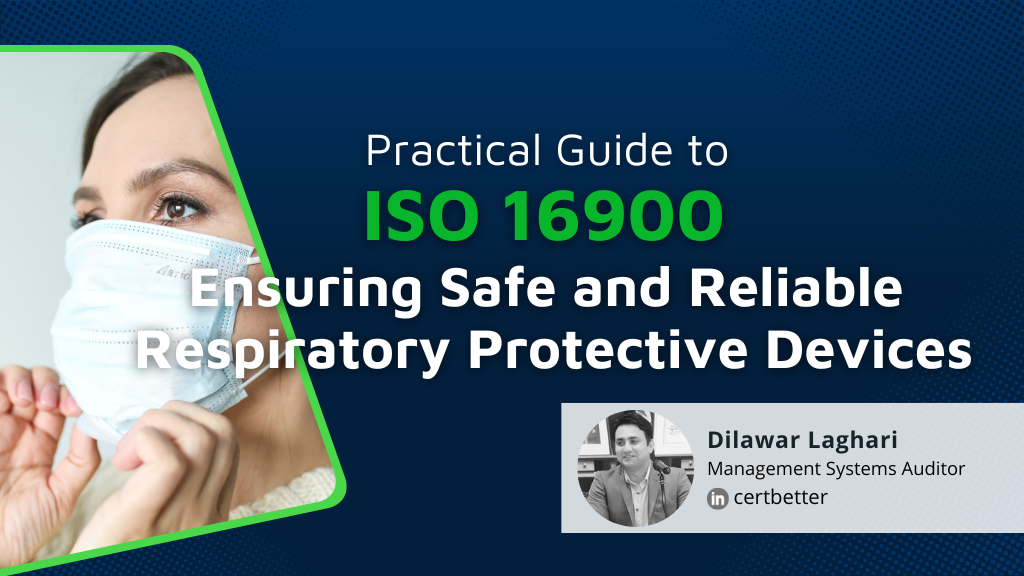
In many industries, the air that workers breathe is not as safe as it appears. Underground mines, chemical plants, construction sites, and even hospital environments can contain invisible particles and gases that pose serious long-term health risks. Respiratory protective devices (RPDs) are often the only barrier between workers and conditions such as silicosis, asbestosis, or chronic obstructive pulmonary disease (COPD).
On this page
Despite their importance, respiratory protection is sometimes treated casually as if one mask is the same as another. This misconception can be costly. A device that has not been properly tested may fail when conditions are most critical, leaving workers exposed and employers liable.
ISO 16900 addresses this risk by providing a comprehensive series of test methods for RPDs. These standards evaluate key factors such as breathing resistance, CO₂ build-up, flame resistance, durability, vision, and communication. Together, they create a global benchmark for ensuring that respiratory protection is not only functional but consistently reliable under real-world conditions.
"For organisations, ISO 16900 is more than a technical specification. It is a foundation for workplace safety, regulatory compliance, and market credibility. "
In this guide, we will explore why the standard matters, who needs it, its key components, and how businesses can align with it effectively.
Helpful Read: ISO 11135 A Practical Guide to Sterilization of Health Care Products
1. Why ISO 16900 Matters
Respiratory risks are often silent but severe. Dust, gases, vapours, and fumes may be invisible, but their impact on human health is well documented.
For businesses operating in high-risk environments, ensuring that respiratory protective devices (RPDs) perform as intended is not optional; it is a duty of care, a compliance requirement, and a business necessity.
1.1 Protecting Worker Health
Occupational diseases such as asbestosis, silicosis, and COPD are often the result of long-term exposure to airborne hazards. Properly tested RPDs, evaluated against ISO 16900 methods, provide confidence that devices will reduce these risks and safeguard employees.
1.2 Reducing Legal and Financial Liability
When PPE fails, employers face more than just lost productivity. They risk lawsuits, compensation claims, regulatory fines, and reputational damage. Compliance with ISO 16900 demonstrates due diligence in selecting and maintaining equipment that meets internationally recognised performance standards.
1.3 Meeting Regulatory Requirements
Across the globe, health and safety authorities from OSHA in the United States to the EU PPE Regulation in Europe and Safe Work Australia expect organisations to use proven protective equipment. ISO 16900 provides a harmonised benchmark that supports compliance in multiple jurisdictions.
1.4 Building Trust with Stakeholders
Hospitals, energy companies, government agencies, and construction firms often require proof of compliance before awarding contracts. Businesses that align with ISO 16900 can reassure auditors, regulators, and clients that their workers are protected by equipment tested to rigorous international methods.
1.5 Enabling Global Market Access
For manufacturers of respiratory protective devices, ISO 16900 opens the door to international trade. Harmonised test methods reduce the need for multiple regional certifications and streamline approval processes, making it easier to distribute products globally.





2. Do You Need ISO 16900? A Practical Checklist
Not every business thinks of itself as needing respiratory protection standards until an incident happens. The reality is that ISO 16900 applies more widely than most organisations realise. It is relevant not only to manufacturers of protective devices but also to businesses that use them daily in their operations.
Here’s a simple self-test to help you determine whether ISO 16900 should be on your radar:
2.1 Do your employees work in environments with dust, fumes, asbestos, or toxic gases?
If yes, ISO 16900 is directly relevant. Industries like mining, welding, firefighting, oil & gas, pharmaceuticals, and healthcare all involve exposure to airborne risks.
2.2 Do you manufacture or supply respiratory protective equipment?
Device makers and distributors need ISO 16900 to validate their products. It is the standard that regulators and buyers look for to confirm performance and safety.
2.3 Are regulators, auditors, or clients requesting proof of PPE compliance?
From government safety inspections to client procurement policies, many external stakeholders now require evidence that respiratory equipment has been tested against ISO benchmarks.
2.4 Do you operate in high-risk sectors such as construction, chemical processing, or emergency response?
These industries are under constant scrutiny because of the potential for catastrophic worker health incidents. Adopting ISO 16900 helps meet industry expectations and protects your workforce.
2.5 Have you experienced incidents of PPE failure, discomfort, or low worker adoption?
Even the most sophisticated devices will be ignored if they are uncomfortable or unreliable. ISO 16900 ensures equipment is tested for usability as well as protection.
3. Key Components of ISO 16900
The ISO 16900 series is not a single document but a collection of parts, each focusing on a different aspect of respiratory protective devices (RPDs). Together, they form a comprehensive framework for testing how RPDs perform in both laboratory and practical conditions.
Here’s a breakdown of the most important components, explained in plain English:
3.1 Breathing Resistance (Part 1)
A respirator must protect without making it too difficult to breathe. Part 1 measures the effort required for inhalation and exhalation, ensuring workers can breathe comfortably while still being protected.
3.2 Mechanical Strength (Part 2)
Straps, valves, and seals must withstand daily wear and tear. Part 2 tests the durability of these critical components so that devices don’t break during use, even in demanding conditions.
3.3 Carbon Dioxide Build-up (Part 3)
If exhaled gases get trapped inside the mask, CO₂ can accumulate and cause dizziness or fatigue. Part 3 measures this risk to make sure devices allow proper airflow and keep inhaled air safe.
3.4 Practical Performance (Part 4)
Laboratory tests aren’t enough. Part 4 evaluates how a device performs in real tasks, does it fits properly, stays sealed, and remains comfortable for long shifts.
3.5 Flame and Heat Resistance (Part 5)
In environments like firefighting or metalworking, heat and sparks are constant hazards. Part 5 checks whether devices can withstand flames or high temperatures without failing.
3.6 Field of Vision and Speech Clarity (Parts 6 & 8)
Workers must be able to see and communicate effectively. These parts measure whether the design of a respirator restricts vision or makes it too hard to speak.
3.7 Durability and Environmental Resistance (Parts 9–15)
These sections test resistance to dust clogging, vibration, drops, corrosion, cleaning, and extreme temperatures. The goal is to ensure devices remain effective in real-world conditions over time.
3.8 Advanced Performance and Ergonomics (Parts 16–20)
The latter parts of ISO 16900 explore factors like balance, stability, sound levels inside the respirator, and combined hazard performance. These tests address modern expectations for comfort and usability.
4. Steps to Align with ISO 16900
Understanding what ISO 16900 covers is the first step. The real value comes when organisations translate these requirements into day-to-day practices that ensure worker protection and compliance. Whether you are a manufacturer, supplier, or end user of respiratory protective devices (RPDs), here’s a clear roadmap for alignment:
Step 1: Assess Your Risks
Start by identifying the respiratory hazards present in your workplace. Are workers exposed to dust, fumes, asbestos fibres, chemical vapours, or multiple hazards at once? A thorough risk assessment sets the foundation for selecting and validating the right equipment.
Step 2: Select Suitable RPDs
Use ISO 16975 (the companion standard on selection, use, and maintenance) to match the correct RPDs to your identified hazards. Not all devices offer the same protection — what works in a hospital may not be effective in an underground mine.
Step 3: Work with Verified Suppliers
Only procure devices that have been tested using ISO 16900 methods. Verified suppliers can provide certification or test reports that demonstrate compliance. This step reduces the risk of purchasing low-quality or counterfeit PPE.
Step 4: Conduct Fit Testing and Training
Even the best-tested device will fail if it doesn’t fit the wearer properly. Conduct regular fit testing to ensure a secure seal and provide training on correct donning, doffing, and daily checks.
Step 5: Document Compliance
Maintain clear records of supplier certificates, fit test results, and any validation studies. Documentation is vital for regulatory inspections, client audits, and internal safety reviews.
Step 6: Integrate with Safety Management Systems
Embed respiratory protection into your broader occupational health and safety framework, such as ISO 45001. This ensures that RPD use is monitored, reviewed, and continually improved rather than treated as a one-off exercise.
5. Challenges in Implementing ISO 16900
While ISO 16900 provides a clear and comprehensive framework for respiratory protective devices (RPDs), implementation is not without difficulties. Many organisations underestimate the complexity of selecting, testing, and maintaining reliable PPE. Below are the most common pitfalls:
5.1 Assuming Any Mask Is Enough
One of the biggest mistakes is treating all respiratory protection as equal. A simple dust mask bought at a hardware store does not provide the same level of protection as a respirator tested under ISO 16900.
Businesses should resist the temptation to cut costs by buying uncertified or untested equipment. The short-term savings are quickly outweighed by the long-term health and liability risks.
5.2 Ignoring Fit Testing
Even a device that passes every ISO 16900 test will fail in practice if it does not fit the wearer’s face properly. Gaps in the seal allow contaminated air to bypass the filter completely.
Regular fit testing is essential and should be repeated whenever equipment models change or when workers experience physical changes that could affect fit.
5.3 Overlooking Comfort and Usability
If equipment is uncomfortable, hot, or restrictive, workers may avoid wearing it or remove it during critical tasks.
ISO 16900 includes practical performance tests to address this, but employers must also gather user feedback and select models that balance protection with comfort.
5.4 Poor Maintenance and Storage Practices
RPDs degrade over time, especially when not cleaned, stored, or replaced correctly. Filters clog, straps lose elasticity, and seals can crack.
A program of routine inspections, cleaning schedules, and replacement intervals is crucial to maintaining effectiveness.
5.4 Supply Chain and Quality Issues
Not every supplier provides products truly tested against ISO 16900. Counterfeit or substandard equipment is a growing problem.
To avoid this, organisations should buy only from verified providers who can present traceable certification and testing documentation.
6. Additional Considerations
Implementing ISO 16900 is not just about testing equipment in a laboratory. Long-term success depends on how well organisations integrate respiratory protection into their culture, systems, and daily operations. Beyond compliance, a few key factors can make the difference between a program that struggles and one that thrives.
6.1 Leadership Commitment
Respiratory protection cannot be left to frontline workers alone. Senior leaders must champion the importance of safe, reliable equipment and allocate the resources needed for training, procurement, and testing. Visible leadership support sends a clear message that safety is a business priority, not just a regulatory requirement.
6.2 Training and Competency
Even the most advanced respirator will fail if used incorrectly. Regular training ensures that workers know how to fit, wear, remove, and maintain their devices. Training should also include awareness of when to replace filters, how to spot equipment failures, and how to respond if a device malfunctions on the job.
6.3 Integration with Broader Safety Systems
Respiratory protection works best when it is part of a structured health and safety management system, such as ISO 45001. This integration enables organisations to link RPD use with risk assessments, incident reporting, audits, and continual improvement cycles.
6.4 Environmental and Safety Compliance
Some RPDs, particularly powered or supplied-air systems, require additional considerations such as battery management, ventilation, or hazardous material disposal. Aligning respiratory protection with environmental and occupational safety obligations avoids compliance gaps.
6.5 Technology and Innovation
The future of respiratory protection includes “smart” respirators equipped with sensors, connectivity, and data tracking. While these innovations promise better monitoring and real-time safety insights, they must still meet the fundamental test methods outlined in ISO 16900.
7. FAQs: Common Questions About ISO 16900
1. Is ISO 16900 mandatory?ISO 16900 itself is not legally mandatory, but it is widely referenced by regulators, auditors, and clients as a benchmark for testing respiratory protective devices. In practice, many jurisdictions expect compliance, especially in high-risk industries.
2. Does ISO 16900 replace regional standards like EN 149 or NIOSH tests?No. Regional standards such as EN (Europe) or NIOSH (United States) remain in place. ISO 16900 provides internationally harmonised test methods, helping manufacturers and buyers align products across multiple markets.
3. Can small businesses ignore ISO 16900 if they use basic masks?No. Even simple dust or filtering masks should meet proven performance standards. Worker health risks do not disappear because an organisation is small. Following ISO 16900 ensures all employees have reliable protection
4. Who performs ISO 16900 testing?Testing is carried out by accredited laboratories and certification bodies that have the proper facilities, equipment, and expertise to run the standardised methods. Manufacturers typically work with these bodies to validate their devices.
5. How does ISO 16900 connect to ISO 45001?ISO 45001 sets the framework for managing occupational health and safety risks. ISO 16900 supports it by providing specific, detailed methods to ensure respiratory protective devices perform as expected within that broader safety system.
6. Is one test enough, or do RPDs need to pass all parts?A single test is not sufficient. Different parts of ISO 16900 cover different aspects of performance, from breathing resistance to flammability. A reliable device must be evaluated across multiple tests relevant to its intended use
8. Where to Download ISO 16900 PDF?
To get the most accurate and up-to-date version of ISO 16900, purchase it from official sources such as the ISO Store or your national standards body (e.g., BSI, ANSI, Standards Australia). Avoid unofficial copies, as they may be incomplete or outdated and could create compliance risks.
9. Conclusion
Breathing may feel effortless, but in many workplaces it is one of the greatest hidden risks. Dust, fumes, and toxic gases don’t announce themselves, and once the damage is done, it cannot be reversed. That is why respiratory protective devices must be more than just equipment on a checklist. They need to be proven, reliable, and trusted.
ISO 16900 gives organisations the confidence that their protective devices have been tested against rigorous international methods. It turns guesswork into certainty by confirming that respirators will perform in the moments that matter most. For manufacturers, it opens doors to global markets. For employers, it reduces liability and builds trust with regulators and clients. And for workers, it ensures the simplest but most essential safety right: the ability to breathe safely at work.
In the end, ISO 16900 is not just about compliance; it’s about responsibility. Aligning with this standard shows that your business values health, safety, and credibility above shortcuts. Because when it comes to protecting people, “good enough” is never enough.