Modern supply chains span multiple borders, time zones, and intricate networks of suppliers, logistics partners, and distribution channels. This interconnectedness brings efficiency, but it also increases vulnerability. A port closure, a cyber incident, a transport strike, or a sudden regulatory change in one region can disrupt operations across the entire chain.
On this page
For many businesses, even a brief interruption can result in production delays, unfulfilled orders, financial losses, and reputational damage.
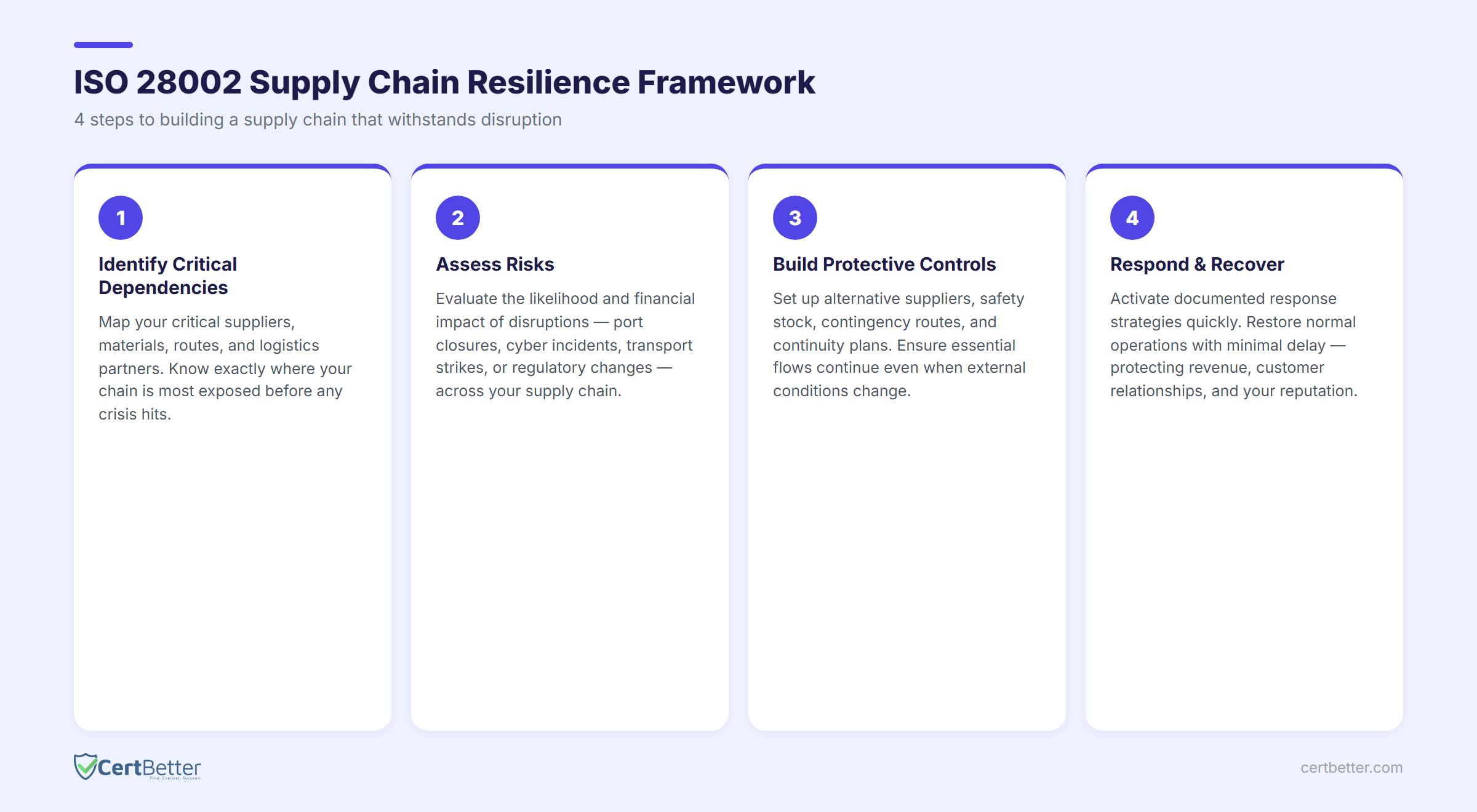
Supply chain resilience is the discipline that prepares organisations to anticipate disruptions, absorb their impact, and restore normal operations quickly. ISO 28002 was developed to provide a structured, evidence-based framework for achieving this. It guides organisations in identifying critical dependencies, assessing risks, protecting essential flows, and building robust response and recovery capabilities.
Although ISO 28002 has since been withdrawn as a formal standard, its principles remain widely used by organisations seeking a practical, internationally recognised approach to strengthening supply chain resilience.
“Resilience is not about avoiding disruption, it’s about ensuring disruption doesn’t stop your business.”
With this article, we’ll break down ISO 28002 in simple, practical terms so you can understand what it covers, why it matters, and how to apply its concepts across your supply chain.
1. Why ISO 28002 Is Crucial for Your Business
If your organisation depends on suppliers, transport providers, warehouses, or global logistics, you already understand how quickly a single disruption can escalate. ISO 28002 provides a structured way to prepare for these moments so your supply chain remains stable when the unexpected happens.
Here’s how this resilience framework supports your business goals, from protecting continuity to strengthening customer confidence.
1.1 Protecting Continuity of Supply
Many businesses discover their weak points only after a disruption has already caused damage. ISO 28002 helps you identify critical suppliers, materials, and routes before any crisis hits. Once these areas are clear, you can build controls that protect the flow of products even when external conditions change.
For example, a manufacturer relying on a single overseas supplier can use ISO 28002 to map this dependency, assess the risk, and set up alternative suppliers or safety stock. The outcome is simple: fewer surprises, fewer shutdowns, and a supply chain that can bend without breaking.
1.2 Meeting Customer and Regulatory Expectations
Mostly buyers, retailers, and regulators increasingly expect suppliers to demonstrate business continuity and resilience. They want assurance that you can deliver during disruptions, not just during normal operations.
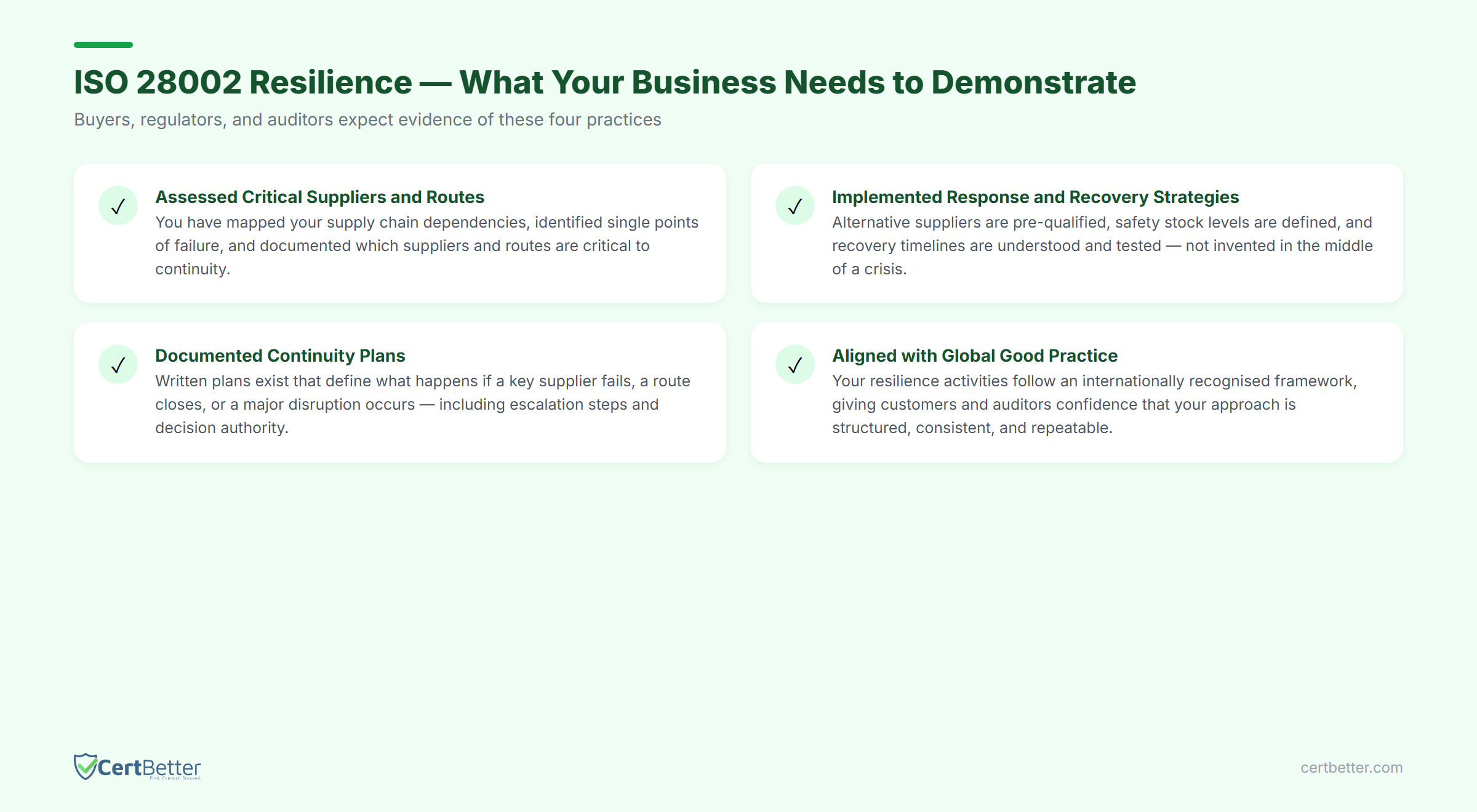
ISO 28002 gives you a recognised framework to show that you have:
- Assessed your critical suppliers and routes
- Documented your continuity plans
- Implemented response and recovery strategies
- Aligned your resilience activities with global good practice
Even though ISO 28002 is now withdrawn, the principles inside it remain highly relevant and continue to be used by organisations wanting to present a clear, structured resilience approach during tenders and audits.
1.3 Reducing Financial and Operational Risk
Disruptions are expensive, often more expensive than the products themselves. Emergency freight, expedited sourcing, rework, lost productivity, and penalties accumulate quickly when supply chains fail.
By following ISO 28002, you can reduce these costs significantly. The standard encourages you to identify the potential financial impact of disruptions, prioritise where resilience matters most, and invest in controls that deliver measurable risk reduction. Over time, this leads to more predictable planning, fewer last-minute decisions, and improved stability across the value chain.
1.4 Strengthening Reputation and Competitive Advantage
In volatile markets, reliability is a competitive advantage. Customers remember which suppliers delivered consistently during crises and which did not. ISO 28002 helps you build the systems, processes, and confidence needed to stay dependable even when conditions shift.